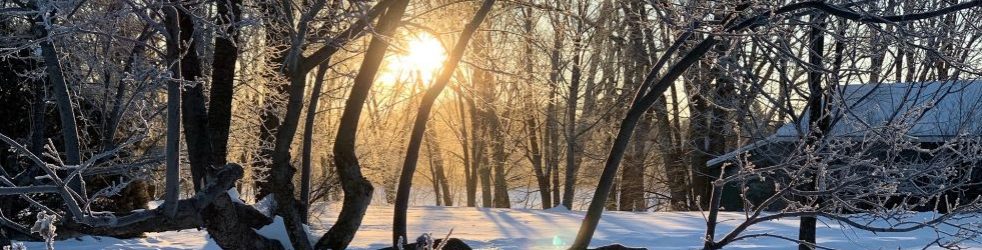

Wow………It’s November! I am still having a hard time getting my head wrapped around the fact that summer has come to an end. It’s amazing to me how the weeks have just marched on by, and how I have so not been keeping up with them.. Last week just whooshed past me….how did that happen?

I have managed to get some knitting, spinning and a little felting in between putting the gardens to rest and work of course.
Finishing up with my first Cardigan Sock, I quickly cast on the second one. If I get that second one on the needles right away, it’s a sure bet the pair will be finished……but if I don’t, well, I don’t have to tell you the end of that story, do I? Lot’s of single ladies kicking around here 🙂
Anyhoo, I have had a few people ask me how I felted my Red Maple Scarf that I posted a few weeks ago, so I promised a tutorial. This is is going to be a picture heavy post, so I apologize in advance to those of you who not have fast connections.
Getting started:
This truly is something that anyone can do at very little cost, other than the sander.
As you can see, I am starting with one of my 2 oz angora/silk braids of roving. In addition you will want some sort of counter protection, a bottle of warm soapy water, a piece of flexible screening (bought in any hardware store) a big towel and a palm sander.
It is very important that the sander is not an orbital palm sander, but rather one that moves back and forth. An orbital sander will move the fibers in the wrong direction (ask me how I know this?)

You start off by tearing very thin, wispy lengths of roving and laying them in one direction, slightly overlapping each row.

Once you have finished the first direction, you will start again, covering the first layer with the same thin, wispy strips of roving in the opposite direction. It is important not to be heavy handed with the fiber as you want your scarf to have nice drape, but you probably won’t want it to be full of holes either, unless you are striving for a more lacey look.

Check the scarf over for bare spots and once you are satisfied with the coverage, gently lay the screening on top of the fiber. Take your soapy water and start wetting the fiber, making sure to get the edges good and wet.

Once the fiber is completely wet, you will want to very very gently rub the screen, moving the fiber ever so slightly. (just a minute with this type of fiber is plenty).
Gently again, lift the screening off of the fiber. The wool at this point is not felted, so you want to be very careful not to disturb it too much. Gently pat the wool, checking again for bare spots and gently push the edges, both sides and ends to give the edges a little bulk.

This is where the fun begins! Making sure that you have rubber soled shoes on and your outlet is one of those protected types (I can’t think of the name off the top of my head), fire up the sander!
As this fiber is very feltable, you only need to keep the sander in one spot for a second or two. Move your sander up and down the length of the scarf, making sure that you get it all. Do the pull test, to see if the fibers are felted (pull up on the fiber…if felted it will come up together, if not, it will separate).
 My working island is only about 60 inches long, which is not long enough for a complete scarf, so I did this in 2 long sections.
After the first section is firm enough, I then very gently folded that section into an accordion type fold. I then layered the dry roving on the edge of the wet section and repeated what I had previously done.

What the sander has done was prefelt the wool, making it workable, but it is still fairly fragile at this point. Gently start working the scarf, rolling it in one direction, unrolling and then rolling again in the other direction. Pay attention to your edges…you will want to use the palm of your hand to add extra friction there, giving a little extra firmness.
 Again, as this type of fiber is highly feltable, you will not have to spend too much time working it. I usually toss it in the microwave at least once for a minute as the heat aids in felting items faster.
Once you feel the scarf is felted to your liking, fill up the sink with some very cold water and let the scarf soak for a few minutes. (cold water finishes the felting)
Let the scarf dry over night and voila….a warm, soft angora, silk scarf to hug your neck on those cold days that are coming your way soon!
I hope you enjoyed this little tutorial and have a fabulous weekend!

 The Woolen Rabbit
Wow,that looks like fun, can’t wait to try it…Guess I will have to order some roving so I can get in trouble…Thanks for the lesson!! Will let you know how it works out.
LikeLike
I think I need to try that! It must be heavenly against your skin. Thanks for the class. 😉
LikeLike
That does look like fun, and I even have one of those sanders! Great scarf!
LikeLike
Thanks for the tutorial; I’ve been curious about nuno felting (would you call this nuno felted?).
LikeLike
I knew I bought my sander for a reason! Gotta go buy some screening… think the Army would miss our back sliding screen door when we move out???? 😉 Too cool of you to share, Kim!
LikeLike
This looks like so much fun – and you’ve got such a nice space to work in. 🙂
LikeLike
What a great lesson! I never knew you could felt this way. That scarf is just georgous! 🙂
LikeLike
You make it sound really simple. How long does the whole process take?
LikeLike
That is really cool. May have to try that! How is the drape?
LikeLike
Thanks, Kim. That looks like fun. You didn’t mention sand paper so I assume you use the sander without?
LikeLike
Very, very cool!! Thanks for the tutorial.
Now I love my palm sander even more!
LikeLike
Wow! What a great tutorial! I’m going to have to give it a try. maybe I can use up some of that fiber I have stashed all over the place. Now to see if that sander I bought dad a few years ago is an orbital or not. 🙂
LikeLike
Oops forgot, that outlet type is a GFI – Ground Fault Interrupt.
LikeLike
What an interesting process! I had no idea a power tool was involved.
LikeLike
Very cool tutorial!
LikeLike
great tutorial! love it. I’ll bet that scarf gets lots of wear 🙂 It’s lovely.
LikeLike
Very cool! Of course, I don’t own any power tools, so…. (grin)
LikeLike
Great tutorial. Sander eh? Will have to go and check. That would be fun!
LikeLike
Fascinating. A sander… I’d never have guessed! But it makes sense, since it gives you lots of friction with little effort.
LikeLike
Wow, gorgeous! And power tools were involved. All the poor, neglected knitter widowers will sit up and take notice of this.
LikeLike
Beautiful scarf!
I wanted to clarify something…my guess is that you would be using the sander just for the motion and not for the sanding, so you would specifically have NO sandpaper attached to it. Would this be correct?
LikeLike
Ground fault circuit interrupter?
What a lovely scarf!
LikeLike
That is amazing – what a great tutorial, I really enjoyed the process!
LikeLike
Now this is something the husband would enjoy too 😉
LikeLike
Wow, that is very cool! Thanks for taking the time to write up and photograph the tutorial.
I’m behind on my blog reading and I see that you’ve been busy! All of your projects look so nice. And Moriah Anne is beautiful and a work of art. I love the colors in the yarn you have in the picture.
LikeLike
A beautiful scarf! Thanks for sharing the how-to!
LikeLike
Great tutorial–thanks1
LikeLike
Wow, that is amazing, thank you for sharing, it looks so soft and cosy too.
LikeLike